
You’ve probably watched a stressed retail associate struggle with a long line of irritated customers while newly deployed terminals still refuse to read standard debit cards. It’s uncomfortable to witness—and even worse to experience firsthand. Retailers are often chasing the next shiny technology trend. The real value, though, is in the ordinary, uncelebrated work of making sure everything functions properly before it ever meets a live customer on the sales floor.
Rolling out new software or hardware straight to the sales floor is a recipe for trouble. If you want to preserve your sanity and protect revenue, you need to design and follow a rigorous, isolated sandbox testing program. Here’s how to test your technology against the realities of day-to-day retail.
Replicate the Exact Payment Chaos
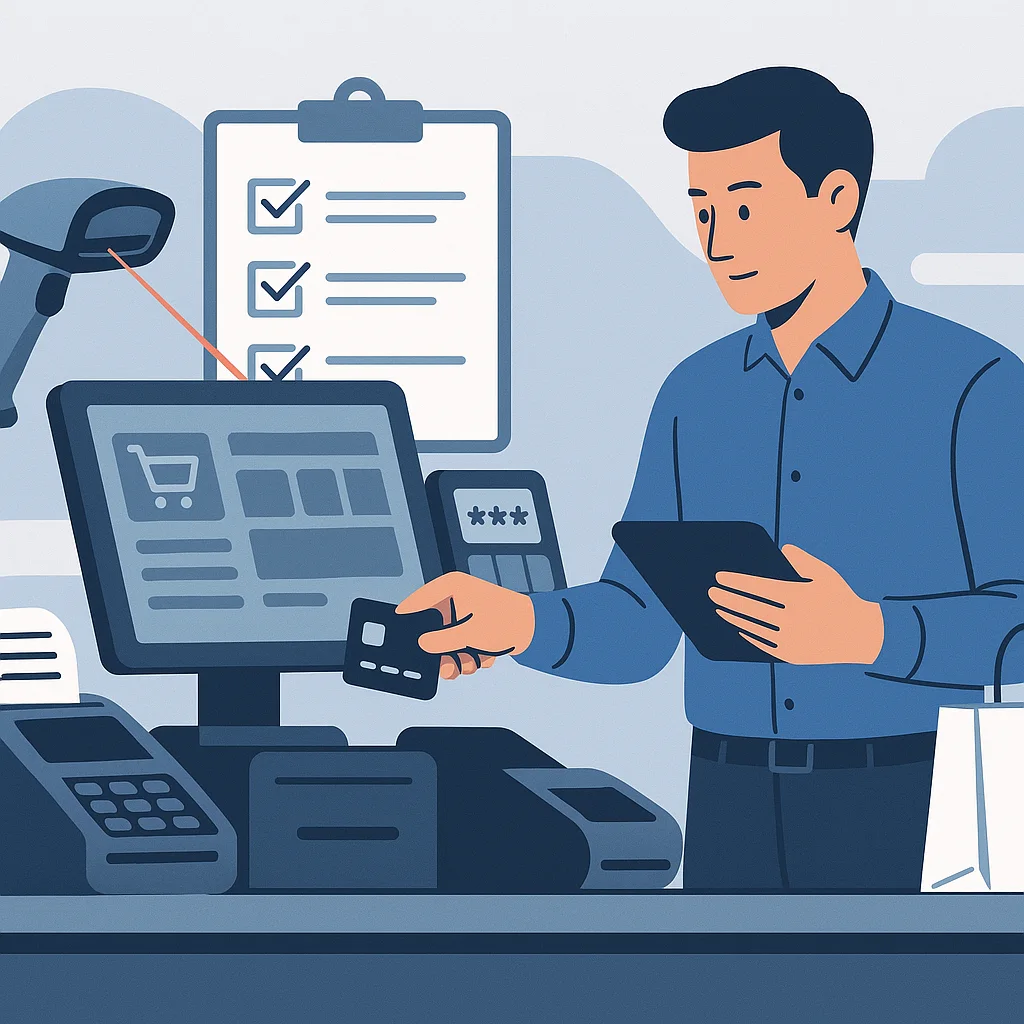
Your top priority should be proving that funds can move safely from a customer’s bank account to your business’s bank account. Don’t rely on test accounts or simulated data provided by your merchant services provider. Instead, test with your real card readers in a real testing environment, using the same cables and smart POS system used in your live locations.
Use real corporate credit cards for every test transaction. The goal is to run through every edge case a cashier will face in daily operations. Process a partial refund, interrupt a contactless payment mid-transaction, disconnect the internet to observe how the POS behaves when it must operate “offline,” and then run store-and-forward processing. The ultimate objective is to understand how your card reader communicates with the banking gateway under pressure.
Scan, Print, and Verify Permissions
Hardware integration is often where even strong applications fail. Pull together your most problematic inventory items and measure how quickly scanners can read them correctly on the first attempt. Any delay beyond 2 seconds per item will damage throughput during peak demand.
At the same time, test every receipt type you use. Confirm tax-break accuracy, verify that logos print correctly, and ensure receipts cut cleanly from the roll without causing jams. During this process, also validate customer account permissions. Make sure a standard sales associate cannot apply a large price reduction, while a manager can override that restriction within 5 seconds without needing to restart the sale.
Audit the Data Trail
A transaction only counts as successful if backend systems capture it perfectly. Every mock sale created during testing must follow an unbroken path from payment processing to inventory tracking to accounting ledger records.
Generate a high volume of test sales and pull the end-of-day report. Reconcile the quantities on each receipt with what appears on your digital dashboard. If inventory doesn’t immediately drop by the exact number sold—or if total taxes due don’t match precisely—then within a week of opening, your analytics will be unreliable. Resolve any data-exchange problems before going live, not after you need to close the books at month’s end.
Build a Resilient Front Line
In the end, testing is about people, not just microchips. Once the technical foundation seems stable, bring in two shop floor supervisors who haven’t used the new system. Give them the manual, put them in a busy scenario, and observe where they struggle. Their feedback will clearly reveal where your setup needs adjustment before the final rollout.