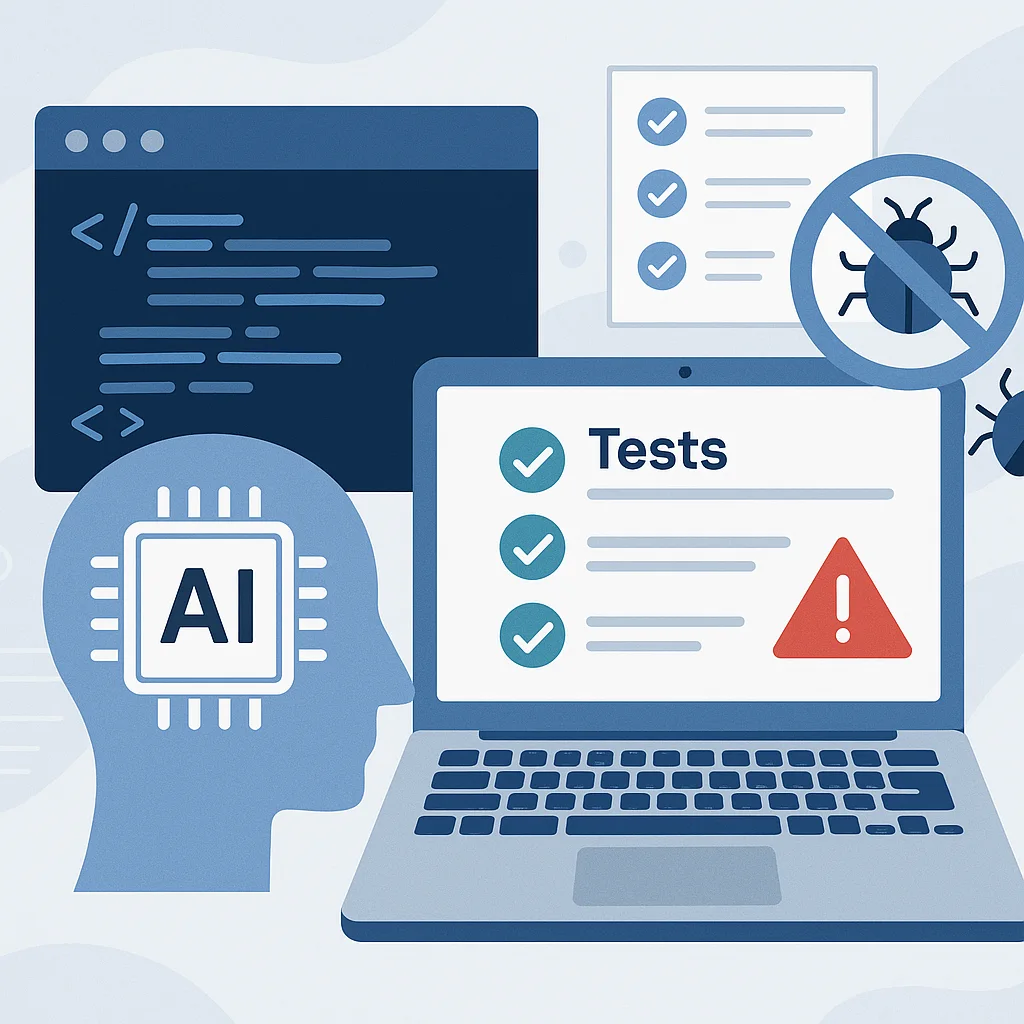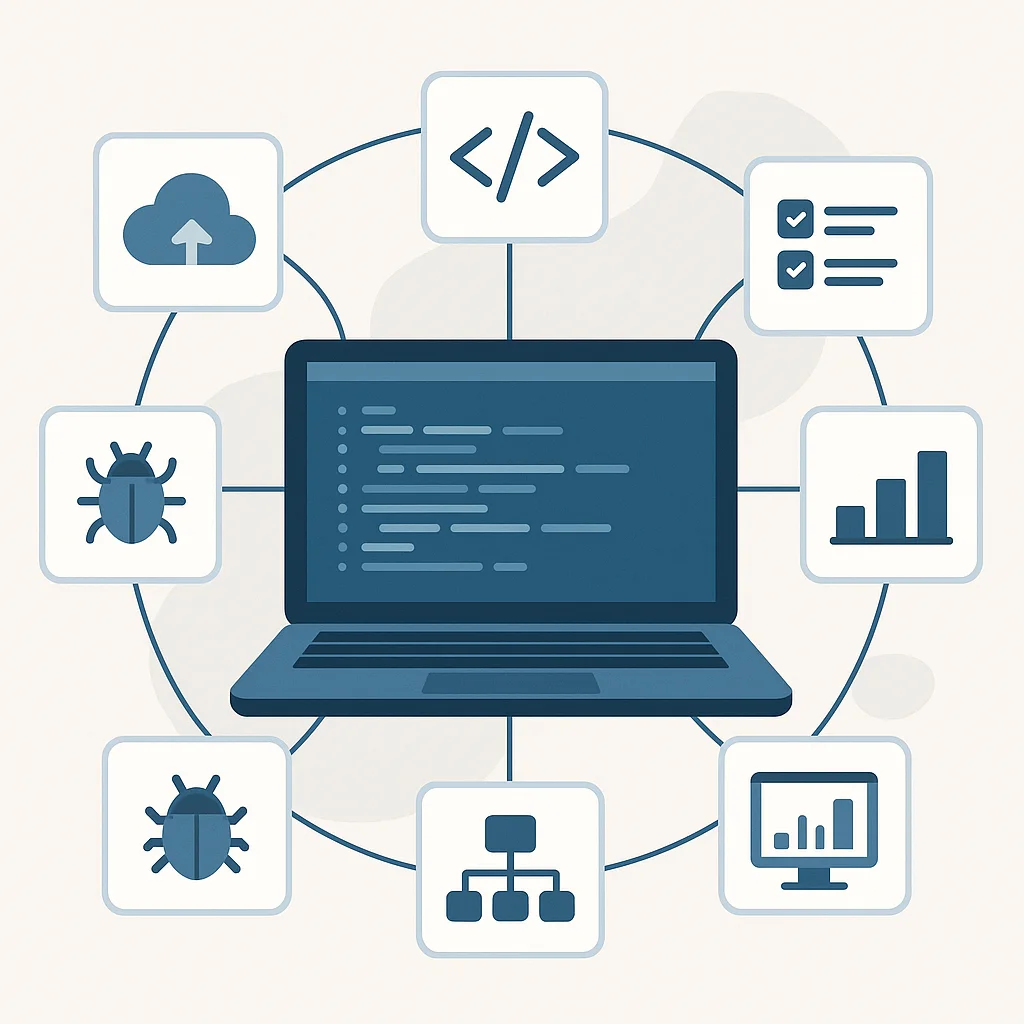


AI-native software teams move faster, change more often, and ship features that behave differently depending on data, prompts, and model updates. Traditional QA practices—manual regression, scripted functional checks, and fixed test cases—still matter, but they’re no longer sufficient by themselves. To maintain quality without slowing delivery, teams need an expanded QA approach that treats AI behavior as a first-class testing surface.
What makes AI-native products different from “normal” software
Traditional applications are largely deterministic: given the same input, you expect the same output. AI-native systems introduce non-determinism and shifting behavior in several ways:
- Probabilistic outputs: The same prompt can yield different responses.
- Model drift and version updates: A model update can subtly change outputs without any code changes.
- Prompt and context sensitivity: Small wording changes or different conversation history can produce big output differences.
- Hidden dependencies: Quality depends on training data, embeddings, retrieval content, tool integrations, and safety filters.
- New failure modes: Hallucinations, unsafe content, biased outputs, data leakage, and broken tool calls become “bugs” alongside UI and API defects.
These characteristics don’t invalidate traditional QA—they expand it. The gap appears when teams treat AI features like conventional features and rely only on fixed expected results.
Where traditional QA alone breaks down
Fixed assertions don’t fit fuzzy outputs
Scripted tests often check exact strings, exact JSON fields, or exact UI text. With AI-generated content, correctness is usually about constraints (policy compliance, factual grounding, format adherence, completeness) rather than a single exact sentence.
Hypothetical example: A support chatbot is expected to “provide refund steps.” A traditional test might hardcode an expected paragraph. In practice, multiple valid answers exist, and the test becomes flaky or forces the model into an unnaturally narrow response.
Regression isn’t only about code
In AI-native products, regression can be triggered by:
- prompt edits,
- model parameter changes,
- retrieval index updates,
- new documents entering a knowledge base,
- safety policy adjustments.
If your regression suite only runs on code changes, you’ll miss quality shifts caused by operational updates.
Edge cases multiply quickly
AI features can be attacked or confused in ways that standard forms rarely are:
- prompt injection (“ignore previous instructions…”),
- jailbreak attempts,
- ambiguous user intent,
- sensitive data requests,
- contradictory context in a conversation thread.
Traditional test design often underestimates the volume and variety of these cases.
“Pass/fail” becomes unclear without explicit quality bars
When teams can’t articulate acceptance criteria for AI behavior, testing degenerates into subjective review. That slows releases and creates disagreement between QA, product, and engineering.
A modern QA approach for AI-native teams
A practical approach combines traditional software QA with AI-specific evaluation methods. The goal is not to test “intelligence,” but to test product requirements under real constraints.
1) Define quality as measurable, testable dimensions
Start by translating “good AI behavior” into dimensions you can evaluate. Common dimensions include:
- Task success: Does it answer the user’s question or complete the workflow?
- Groundedness: Are claims supported by permitted sources (when retrieval is used)?
- Safety and policy compliance: Does it refuse disallowed requests appropriately?
- Format and structure: Does it return valid JSON, a table, a checklist, or a specific schema?
- Tone and UX: Is it appropriately concise, non-judgmental, and consistent with brand voice?
- Tool reliability: When calling APIs/tools, does it choose the right tool and handle failures?
- Latency and resilience: Does it degrade gracefully on timeouts, rate limits, or missing context?
Document these as acceptance criteria per feature. Even a simple rubric (“must include steps; must not mention internal data; must cite source when available”) reduces subjective debates.
2) Use “specs for behavior,” not only expected outputs
Replace brittle golden answers with constraint-based checks:
- Keyword or section presence (e.g., “must include a warning and next steps”)
- Schema validation (e.g., keys exist; types correct; no extra fields)
- Policy checks (e.g., refusals for restricted requests)
- Source attribution requirements (e.g., cite retrieved document titles)
Hypothetical example: For an “expense categorization assistant,” instead of expecting the exact category label text, assert:
- category is one of allowed values,
- confidence is provided,
- if confidence is low, it asks a follow-up question.
3) Build a representative evaluation set (and maintain it like a product asset)
Create an “eval set” of prompts and scenarios that represent real usage, including:
- happy paths,
- ambiguous requests,
- adversarial attempts,
- multilingual inputs (if supported),
- long conversations and context carryover,
- tool failures (simulated or staged),
- sensitive data scenarios.
Make it versioned and reviewed. Treat it like a regression suite: when a production incident happens, add a new test case that would have caught it.
Practical tips:
- Start with 50–200 high-value scenarios rather than thousands of shallow ones.
- Tag cases by feature area, risk, and expected constraints.
- Refresh cases when new product capabilities ship.
4) Combine automated evals with targeted human review
Automation scales, but human judgment remains essential—especially for nuanced UX.
A balanced workflow:
- Automated nightly evals for broad coverage and trend tracking.
- Pre-release gates on critical scenarios (e.g., safety, data exposure, tool correctness).
- Human spot checks on a rotating sample, focused on new features or areas with recent model/prompt changes.
Human review becomes more consistent when reviewers use a rubric (e.g., 1–5 for task success, groundedness, safety). The rubric doesn’t need to be perfect; it needs to be stable and actionable.
5) Test the whole AI system, not just the model output
AI-native behavior often emerges from multiple components:
- prompt templates and system instructions,
- retrieval query formation,
- document chunking and ranking,
- tool selection logic,
- post-processing and formatting,
- safety filters and redaction.
Design tests that isolate layers when diagnosing issues:
- Retrieval-only checks: does the right source appear in top results?
- Tool-call checks: does it call the correct function with valid parameters?
- Post-processing checks: does it strip sensitive fields before display?
Hypothetical example: If a chatbot answers incorrectly, the bug might be:
- retrieval pulled outdated policy,
- the prompt discouraged asking clarifying questions,
- the response formatter removed key disclaimers.
Traditional UI/API QA won’t pinpoint this unless your test design mirrors the architecture.
6) Make non-determinism testable: control what you can, measure what you can’t
You can’t eliminate variability entirely, but you can manage it:
- Keep a stable configuration for regression runs (model version, temperature, system prompt).
- Run multiple trials for high-risk scenarios and check consistency against constraints.
- Track “allowed variability” (e.g., wording can change, but policy compliance cannot).
Where exact matching isn’t possible, use scoring approaches:
- Pass/fail constraint checks (hard gates)
- Graded rubrics (trend tracking)
- “Similarity to reference” only for narrow cases where it’s appropriate (e.g., short factual answers)
7) Add security and privacy testing tailored to AI features
AI introduces new ways to leak or infer sensitive data. Expand your QA checklist with:
- prompt injection attempts to override instructions,
- requests for secrets, internal system messages, or hidden tools,
- data retention expectations (what is stored, where, and for how long),
- PII redaction validation in logs and user-visible outputs,
- authorization boundaries (what content retrieval is allowed per user role).
Run these tests continuously, not just at the end, because prompts and guardrails change frequently.
8) Treat production monitoring as part of QA
In AI-native systems, some quality signals only appear at scale. Establish lightweight monitoring that supports QA learning loops:
- capture anonymized failure categories (refusal errors, tool failures, format errors),
- track top user intents and where the assistant fails,
- flag policy-violating outputs for rapid triage,
- monitor retrieval quality shifts after knowledge base updates.
Then feed insights back into:
- new eval cases,
- updated prompts,
- improved guardrails,
- clearer product requirements.
A practical rollout plan for teams starting now
If your team currently relies mostly on traditional QA, adopt AI-native QA in phases:
- Week 1–2: Define quality dimensions and rubrics for one AI feature.
- Week 2–4: Build an initial eval set with real prompts (sanitized) plus edge cases.
- Month 2: Automate regression runs with constraint checks and a small human review loop.
- Ongoing: Add incident-driven test cases and monitor drift after model/prompt/retrieval changes.
- Before each release: Run a risk-based test gate (safety, privacy, tool calls, critical workflows).
This approach preserves the strengths of traditional QA—structured test planning, regression discipline, clear defect reporting—while adding the evaluation methods AI features demand.
The new definition of “done” for AI-native teams
For AI-native products, “done” can’t mean “all test cases passed” if the test cases only cover deterministic UI and API behavior. “Done” needs to include:
- defined behavioral acceptance criteria,
- repeatable evaluations over representative scenarios,
- safety and privacy validation,
- layered testing across prompts, retrieval, tools, and post-processing,
- monitoring-backed feedback loops.
Traditional QA remains necessary—but AI-native teams that rely on it alone will either ship avoidable failures or slow down under manual review. The practical path forward is to evolve QA into a discipline that measures behavior, manages variability, and continuously adapts as the system learns and changes.